

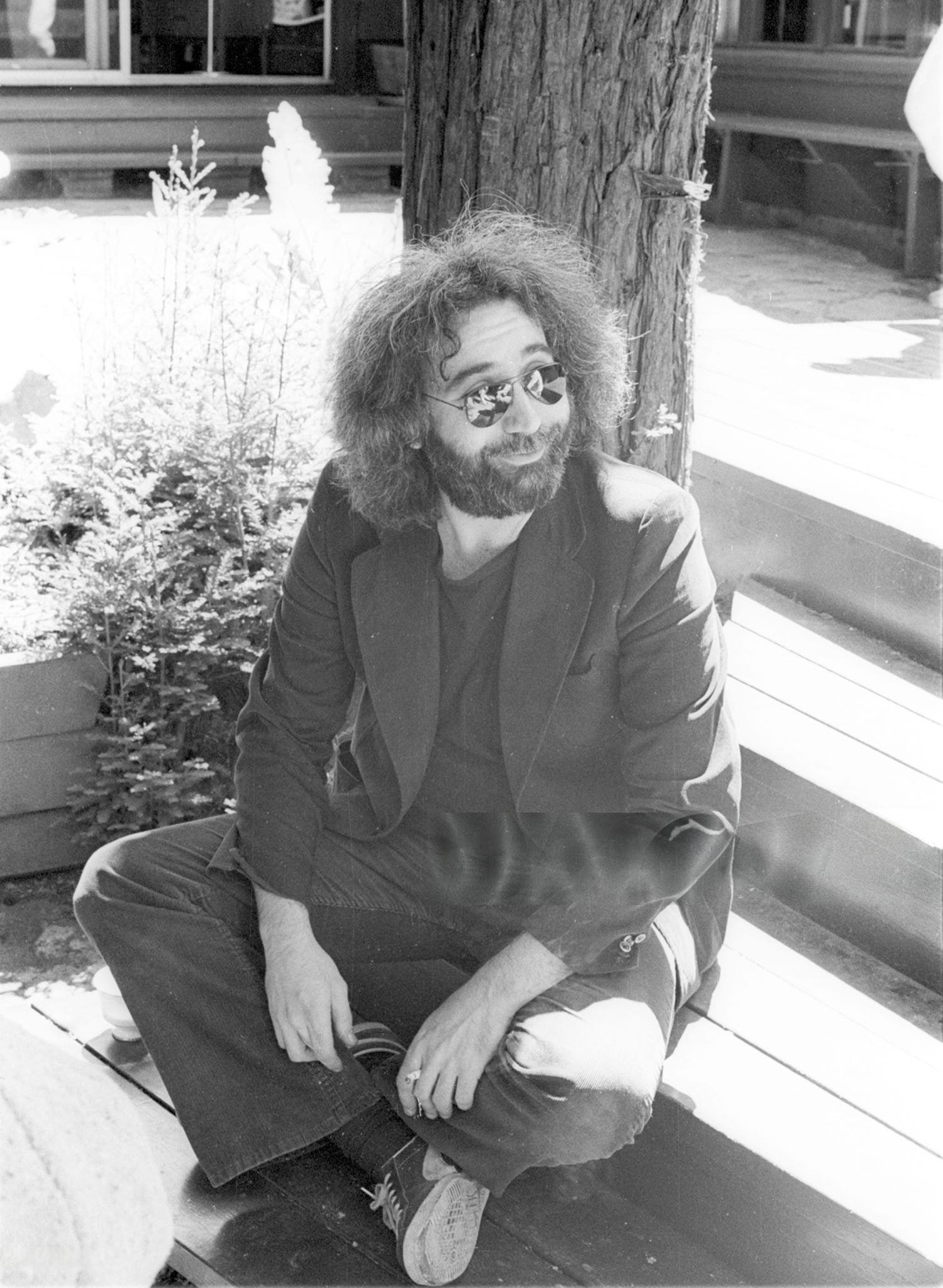
Most accounts of Jerry Garcia’s Indian connection arrive near the end of his life. You hear his guitar moving through Sanjay Mishra’s Blue Incantation, then you see a portion of his ashes entering the Ganges near Rishikesh. Both moments belong here. They just do not tell you where the story started.
The more revealing part is quieter. Garcia never picked up a sitar for publicity, announced an ‘Indian phase’ or tried to pass himself off as a spiritual teacher. India entered his life through records, friendships, benefits, rehearsals and long stretches of improvisation. It gave him another way to consider melody and rhythm: disciplined but never locked down. That balance mattered to him all his life.
One of the earliest clues comes from David Nelson, Garcia’s old friend from the folk and bluegrass years. Nelson was also an original guitarist and one of the musicians who formed the wonderfully named New Delhi River Band, one of the South Bay’s earliest psychedelic blues groups though the name itself may not have had any direct connection to India’s capital.
Nelson later remembered a Ravi Shankar record playing when he, Garcia and several friends took LSD together for the first time in mid-1965. The published account does not identify the album, and Nelson was recalling the experience many years later, so this is personal memory rather than anything resembling a session log. Even so, the timing is difficult to ignore. Indian classical music was in the room just as Garcia’s musical life was turning from his intense acoustic apprenticeship to the electric world of the Warlocks and, before long, the Grateful Dead.
This was several months before the Beatles released “Norwegian Wood” and introduced the sound of the sitar to a much wider rock audience. One Ravi Shankar record did not create Garcia’s style, of course. But the setting is revealing. His first psychedelic experience unfolded to music shaped by drone, raga-based melodic development, rhythmic cycles and slow, patient intensification, qualities that would later find a natural echo in his own instinct for allowing improvisation to unfold gradually and discover its shape as it went along.
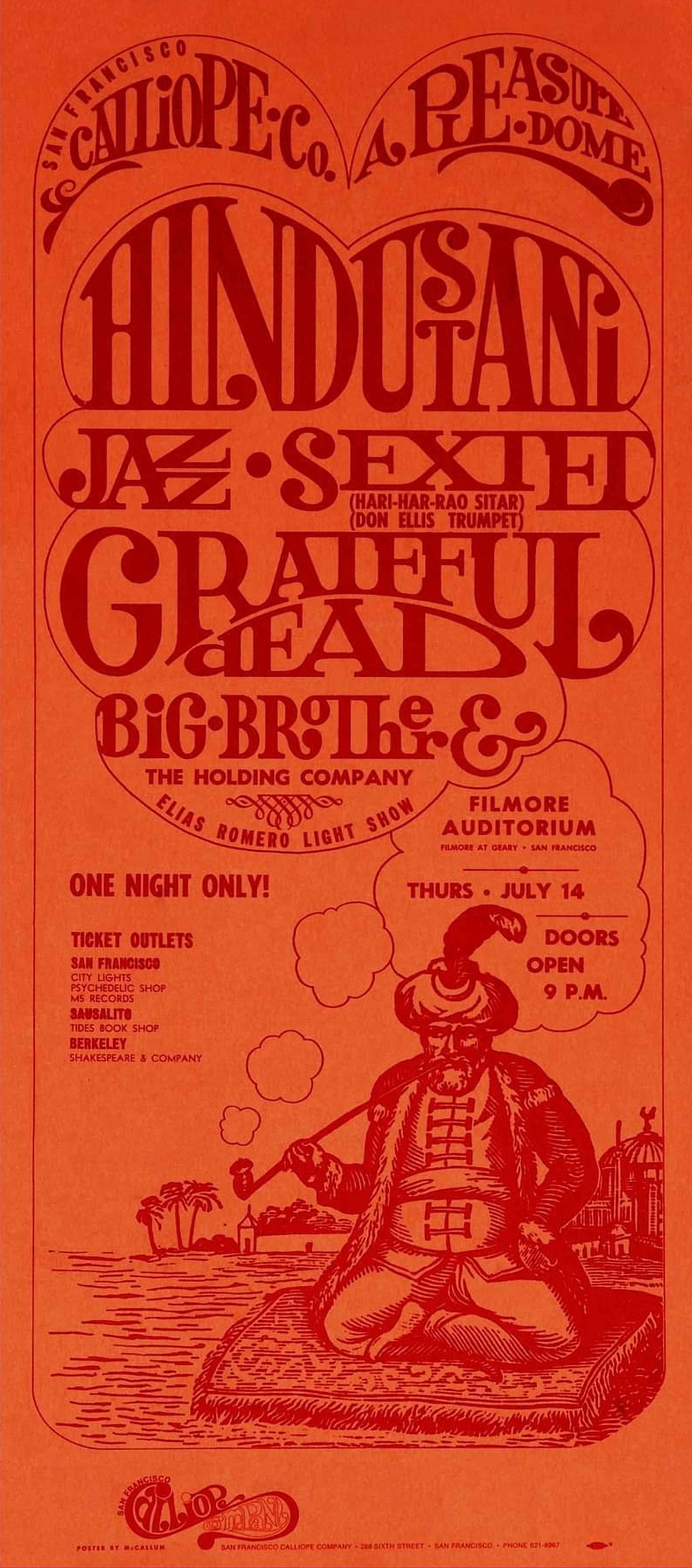
Nearly sixty years ago, on July 14, 1966, two very different musical worlds crossed paths at San Francisco’s Fillmore Auditorium. The Hindustani Jazz Sextet, led by trumpeter Don Ellis and sitarist Harihar Rao, shared the bill with the Grateful Dead and Big Brother and the Holding Company. At a time when the city’s psychedelic scene was only beginning to take shape, the Sextet was already bringing Indian rhythmic ideas into jazz.
The timing makes the evening even more interesting. It happened more than a year before Mickey Hart joined the Dead and began exploring Indian rhythm within the band. We cannot know exactly what Jerry Garcia or Phil Lesh took away from the performance, but the young Grateful Dead found themselves face to face with one of America’s earliest serious experiments in Indian–jazz fusion.
It was also one of the Sextet’s last firmly documented appearances from that original period before the group largely slipped from view. They left behind very few recordings and were together only briefly, but that night at the Fillmore remains a remarkable meeting point between Indian classical music, modern jazz and San Francisco psychedelia.
By 1967, Indian music was no passing curiosity in Garcia’s listening life. In an April column by Ralph J. Gleason, Garcia moved easily through the music he loved: jazz, Django Reinhardt, soul, rhythm and blues, old-time blues, jug-band music and Indian music. He mentioned it without ceremony. It simply belonged beside everything else. That small detail tells us more than any fashionable sitar cameo could. Garcia was drawn to music that offered freedom without losing its inner structure.
The Bay Area was bringing those worlds together in public as well. On January 14, 1967, the Grateful Dead played the Human Be-In in Golden Gate Park. As the day drew to a close, Allen Ginsberg and Gary Snyder led the gathering in “Om Sri Maitreya.” Garcia was certainly there, although there is no evidence that he personally joined the chant and the story does not need that embellishment. What matters is the setting: his guitar was part of an afternoon in which Indian sacred language, Beat poetry, psychedelic idealism and collective music all occupied the same field.
Two weeks later came the Mantra-Rock Dance at the Avalon Ballroom, held to raise money for San Francisco’s newly opened Radha-Krishna Temple. A. C. Bhaktivedanta Swami Prabhupada was there, Allen Ginsberg led the kirtan, and the participating bands accepted modest fees so that whatever remained after expenses could go to the temple.
Later retellings sometimes place Garcia directly inside Prabhupada’s chant. The most detailed eyewitness account specifically names Phil Lesh and Pigpen among the Dead musicians who joined in, but not Garcia. That does not prove he stayed out; it simply means we should not add him to the scene without firm documentation.
The story hardly needs embellishment. Garcia and the Grateful Dead helped draw a packed audience to a benefit that gave practical support to a new Indian religious institution finding its feet in San Francisco. That is meaningful enough on its own.
Around the same time, Indian rhythm moved from the wider Bay Area culture into the Grateful Dead’s rehearsal room. Phil Lesh played Mickey Hart an album featuring solo performances by tabla master Ustad Alla Rakha. Hart was immediately drawn in. When the Dead travelled to New York in December 1967, he arranged to meet Rakha and came away with a basic understanding of Indian rhythmic subdivisions and cycles.
Back in California, Hart brought those ideas into the band’s January rehearsals, working closely with Bill Kreutzmann as the Dead explored unfamiliar metres during the Anthem of the Sun period. Blair Jackson connects those sessions directly to “The Eleven.” None of this made Garcia a student of tala. But Indian rhythmic thinking had clearly entered the band’s working life. Garcia now had to hear those shifting patterns, respond to them and help turn them into collective improvisation.
The connection became much more tangible on September 20, 1968, when the Grateful Dead played a benefit at Berkeley Community Theatre for the Ali Akbar College of Music. Founded the previous year by the great Sarod master Ustad Ali Akbar Khan, the school was built around the patient, demanding process through which Hindustani music is passed from teacher to student.
The concert survives on tape and is listed in Garcia’s official archive, which records Shankar Ghosh and Vince Delgado joining the drummers during the set. Years later, Khan’s son Alam remembered that the Dead had also helped with early fundraisers and provided sound support for his father’s concerts. The complete history of that relationship may never be reconstructed, but the larger point is hard to miss: the band did more than admire Indian music from a distance. It gave its time, practical help and audience to an institution devoted to keeping that tradition alive.
The surviving recording moves from “Saint Stephen” into “The Eleven,” then opens into a long percussion passage with tabla master Shankar Ghosh and doumbek player Vince Delgado. A 1976 Diga Rhythm Band biography adds a wonderfully vivid stage picture: the Grateful Dead’s amplifiers rolling apart, two risers appearing between Mickey Hart and Bill Kreutzmann, and the four percussionists working their way through several talas. The same account says Ustad Ali Akbar Khan composed the closing rhythmic material.
There is one complication. The biography remembers all this happening during “Alligator,” while the surviving tape and Garcia’s official archive place the percussion section after “The Eleven.” Hart later recalled the risers and also connected the episode with “Alligator,” so the physical scene may well be right even if the exact sequence remains uncertain.
Bob Weir later gave the story its most personal detail. In the documentary Play Like a Lion: The Legacy of Maestro Ali Akbar Khan, he remembered sitting up through the night listening to Indian music and spoke of how closely Garcia listened to Ustad Ali Akbar Khan. When asked whether Khan’s music had entered Garcia’s playing, Weir’s answer was immediate: “You bet.” He even said the Grateful Dead would not have become the same band without Khan and the college he founded. That matters because it comes from the guitarist who spent nearly thirty years listening and responding to Garcia from only a few feet away. It also changes the familiar emphasis. Ravi Shankar was certainly part of Garcia’s musical world, but in the room where Garcia and Weir listened late into the night, Ali Akbar Khan’s sarod may have mattered every bit as much as the Sitar.
Listening soon turned into playing. Zakir Hussain remembered his first musical encounter with Garcia taking place at Mickey Hart’s barn around 1970, during a jam that ran for almost four days. The rule was simple: the music must never stop, and at least two people had to keep playing at all times.At some point, Hussain fell asleep on the barn floor. A few hours later, he woke to find Jerry Garcia and David Crosby standing nearby, playing and singing. He looked around, found a drum and joined them.
The exact date remains uncertain, but the scene itself is wonderfully clear. Their first known musical exchange was not a carefully arranged East-meets-West concert. It happened almost by accident, in a barn where musicians came and went, slept when they had to, and somehow kept the music alive for nearly ninety-six hours.
Garcia’s interest in Indian musical ideas did not mean he admired every kind of Indian influenced fusion. In a 1974 interview, he acknowledged John McLaughlin’s extraordinary technique and called his execution remarkable. But the Mahavishnu Orchestra left him cold. To Garcia, the music sounded “nervous and agitated rather than energetic.” What he wanted was “more beauty” and “more soulfulness.” This was not a rejection of complexity, and certainly not a judgement on Indian music. Garcia’s point was much simpler. Technique could be dazzling, but unless it carried some human feeling, virtuosity alone was never going to hold his attention for long.
By the end of May 1975, this long musical conversation had moved fully into public view. Garcia joined the Diga Rhythm Band for a free afternoon concert in Golden Gate Park, playing alongside Zakir Hussain, Mickey Hart and musicians connected to the Bay Area’s Indian music community.
Even the exact patch of grass has become an archival puzzle. Garcia’s official site places the concert at Marx Meadow, while later research argues that sprinklers flooded the original site and forced the musicians across the road to Lindley Meadow. The location remains open to debate. The music does not. Garcia joined Diga for a piece identified in different records as both “Happiness Is Drumming” and “Fire on the Mountain.”
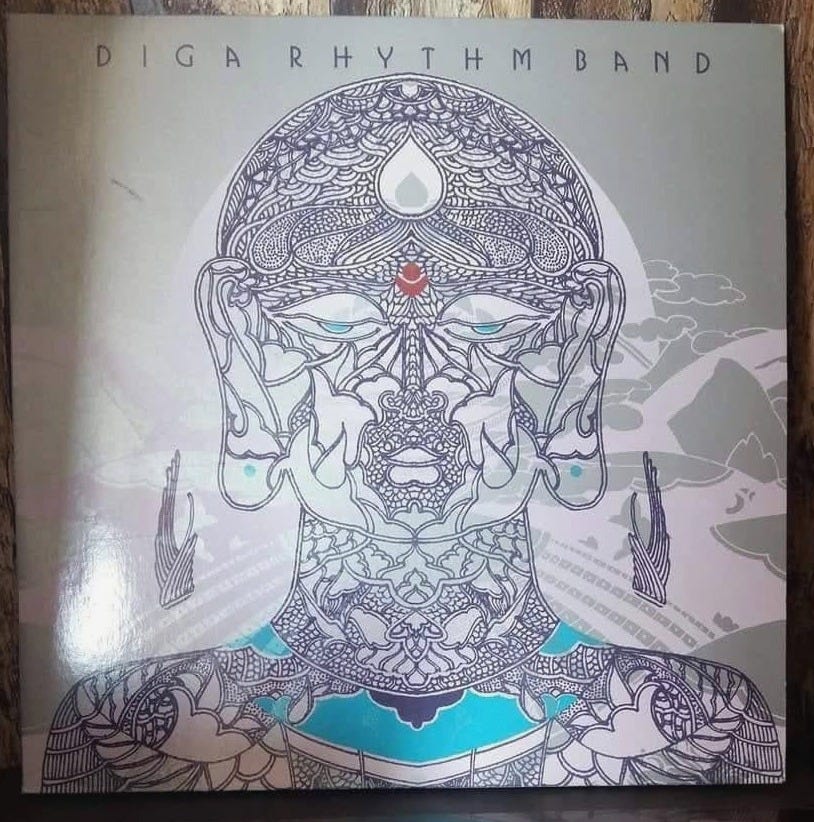
His work with Diga went beyond that famous precursor. On the group’s 1976 album, Garcia played guitar on both “Happiness Is Drumming” and “Razooli.” The second track is easy to overlook because it does not lead neatly into a Grateful Dead standard. But it tells us that Garcia was not simply dropping in for one memorable experiment. He was working inside a percussion centred ensemble where tabla and duggi tarang sat alongside gongs, talking drum, marimbas, vibes and a Western drum kit. It was a genuine Indian-American musical collective within the Dead’s extended family.
“Fire on the Mountain” grew from “Happiness Is Drumming,” and Zakir Hussain was already introducing the piece by the later title at the 1975 park concert. But musical lineage is not the same as individual authorship. “Happiness Is Drumming” was credited collectively to the Diga Rhythm Band, while the finished Grateful Dead song is credited to Mickey Hart and Robert Hunter. The more interesting truth is less tidy: one of the Dead’s most enduring songs grew from a musical setting in which Garcia’s guitar moved through a rhythmic framework shaped in part by Indian musicians and Indian ideas of pulse.
There was also a quieter yogic connection within Diga itself. Tabla player Aushim Chaudhuri was the son of Haridas Chaudhuri, who arrived in San Francisco in 1951 and became one of the earliest influential teachers of Sri Aurobindo’s Integral Yoga in America.
Ram Dass (born Richard Alpert) travelled to India in 1967, became a disciple of Neem Karoli Baba and spent decades teaching ideas drawn from bhakti yoga, meditation and other Indian spiritual traditions. Years later, Ram Dass found a spiritual language for what many people experienced around the Grateful Dead. In his eulogy for Garcia, he wrote that they were “not a tribe… or a family,” but “a bubble of awareness” riding an “ocean of sound.” He also described the music as a spiritual practic, a doorway through which people could reach something deeper in themselves.
That does not prove the Dead consciously modelled their concerts on Indian devotional chanting. But it does show how a teacher deeply shaped by Indian spiritual traditions understood those gatherings: as spaces of attention, release and shared listening. Garcia did not preach from the stage. He helped create the conditions in which people could enter the music together.
The late career connection that really matters came through Sanjay Mishra. Garcia met the Calcutta-born guitarist in July 1994, while accompanying Deborah Koons Garcia on a research visit to Greenpeace’s national office in Washington. Mishra was working there at the time and, after speaking with Garcia, gave him a copy of his debut album, The Crossing. A few days later, Garcia called. He liked what he had heard and offered to play on Mishra’s next recording.
When Mishra asked why he thought the partnership would work, Garcia called the music “the right middle ground” and added, “I can’t do the traditional stuff.” It may be the most revealing line in the whole story. Garcia respected Indian classical music enough to recognise where his knowledge ended. He did not need to imitate the tradition or pretend to belong inside it. What he needed was a musician whose own musical language already moved naturally between worlds.
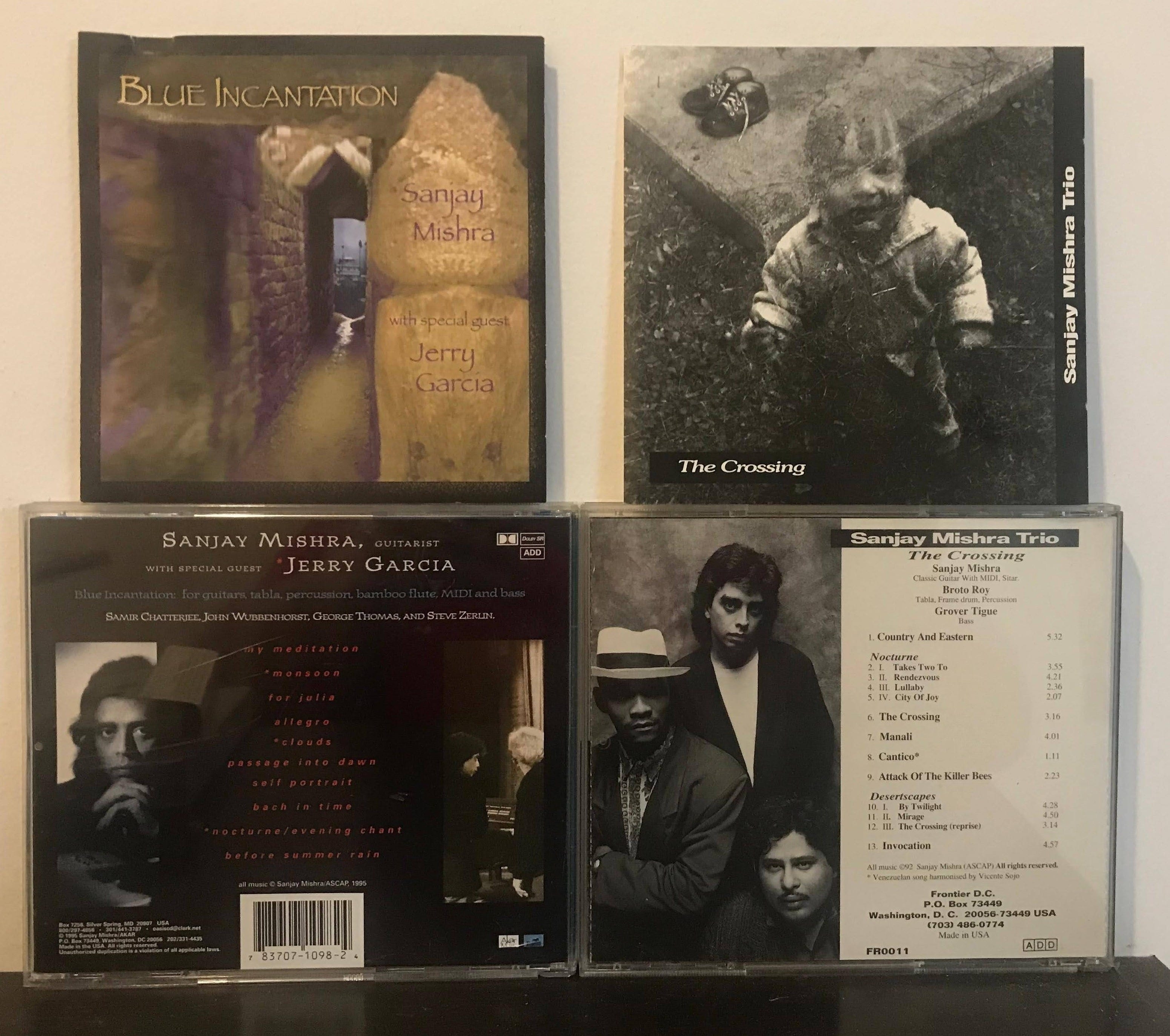
Mishra gave Garcia exactly the kind of space in which his playing could breathe. His music drew naturally from Western classical guitar, jazz and Indian rhythmic ideas, with Samir Chatterjee’s tabla carrying much of the album’s distinctly Indian pulse. Garcia played electric guitar on three Blue Incantation tracks: “Monsoon,” “Clouds” and “Nocturne/Evening Chant.”
Yet Garcia never tried to sound like an Indian classical musician. He remained unmistakably himself, bringing his long, searching electric lines into Mishra’s more delicate acoustic setting and listening closely to the space around him. That is what makes the collaboration work. India is not reduced to mood or decoration, and Garcia’s presence never overwhelms the music. Mishra, Chatterjee and Garcia retain their voices while leaving enough room for a genuine conversation to take place.
The sessions left more behind than the finished 1995 album. In 2021, three previously unreleased performances from the December 1994 Club Front session appeared as Front Street Outtakes. “Dancing,” “Loving Sky” and “Pranam” were alternate takes of pieces released on Blue Incantation as “Monsoon,” “Clouds” and “Nocturne/Evening Chant.”
Presented with far less studio polish, the outtakes as they are meant to be, let you hear the collaboration while it was still taking shape, the two guitarists and percussionists leaving room, answering one another and working through different possibilities. Blue Incantation is widely described as one of Garcia’s final studio collaborations, and it certainly contains some of the last studio work of his life.
That imagined escape nearly became a real journey. Deborah said that she, Garcia and Mishra planned to travel to India after the Blue Incantation sessions. Garcia died on 9 August 1995 before the trip could happen. The journey he had talked about in life would eventually take another form.
Before dawn on 4 April 1996, after a lunar eclipse (Poorna Chandra Grahan), Deborah, Bob Weir, Mishra and a small group held a quiet ceremony near Rishikesh. A portion of Garcia’s ashes was placed on paper carrying farewell messages from the band and released into the upper Ganges. Deborah said the idea had come to Weir in a dream. They kept the ceremony secret because no one wanted a private goodbye to become a Deadhead gathering.
Eleven days later, on 15 April 1996, Garcia’s remaining ashes were scattered on the waters beneath the Golden Gate Bridge. The symmetry almost writes itself: one farewell in the river that carried the Indian part of his story, another in the bay that had carried the Grateful Dead from the beginning.
Once you put all these details together,a Ravi Shankar record playing during Garcia’s first acid trip, Alla Rakha’s rhythmic ideas finding their way into Dead rehearsals, “The Eleven” giving way to Shankar Ghosh, Ali Akbar Khan’s reported closing composition, Zakir Hussain waking in the middle of a jam that lasted nearly four days, Garcia choosing beauty and soulfulness over technical display, the often-overlooked Diga track “Razooli,” Ram Dass’s “ocean of sound,” a Calcutta guitarist recording at Club Front, Bombay imagined as a place of escape, and farewell notes floating near Rishikes,a very different picture begins to emerge.
India was not some decorative footnote added at the end of Jerry Garcia’s life. It was a quiet current running through his musical world for decades, shaping the way he thought about rhythm, trusted improvisation and kept searching for freedom within form.
Lovely piece Sujit ! Sharing with Amithav😊
Thank You for that! Enjoyed it and also enjoyed the reflective mood I felt as I read through it